The work of leadership

Wang

A leadership philosophy in one character

What makes your leadership possible

You are answerable for results, but much of what makes those results possible lies outside your direct control. You need backing, cooperation, and your own ability to exercise judgment.

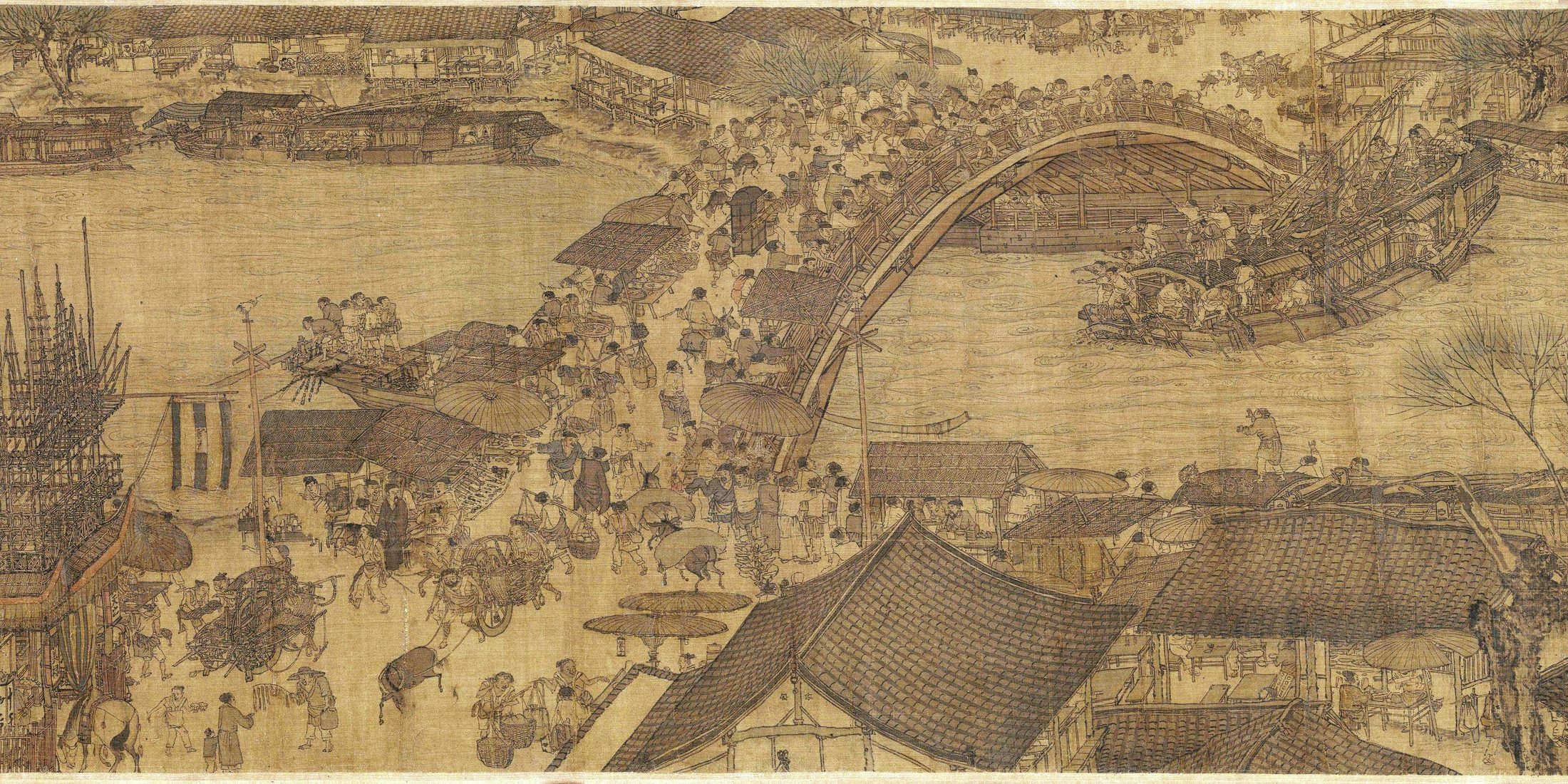
A crowded arched bridge crosses a river of boats, surrounded by traders, travelers, and people working along the banks.
Along the River During the Qingming FestivalAttributed to Zhang Zeduan · Early 12th century
Rainbow Bridge detail · Palace Museum, Beijing Public-domain reproduction ↗

You can have the authority to ask and lack the cooperation to deliver.

You can have people’s loyalty while losing the mandate that lets you act.

You can have both and be too depleted or confused to lead well.

These are different problems. Recognizing the difference helps you decide where to put your effort.

This philosophy gives you three places to check: the mandate above, your own leadership in the middle, and the people and circumstances through which the work happens below. It helps you notice trouble earlier, recover when something goes wrong, and strengthen the relationships your work depends on.

Let the philosophy help you find the root cause of leadership challenges.

The picture

See the whole relationship

This guide develops a teaching about the character 王: heaven above, earth below, the leader in the middle, and a stroke connecting all three. Our practical interpretation of that teaching is a philosophy of relational leadership: attending to the relationships through which people accomplish something together.

Wang: the leader in the middle Three horizontal strokes joined by one vertical. The mandate is above, the leader in the middle, and the people and conditions of the work below. All three are present together.

Above

The mandate

Read the check

You are entrusted with something and given room to decide how to accomplish it. You need agreement about the result, authority and resources to pursue it, and backing for your decisions. The terms may need to change as circumstances change. You also need to believe in the work and want to see it done.

In the middle

The leader

Read the check

You judge what the situation requires and take responsibility for a course of action. Your perception, conduct, energy, and attention affect everyone else’s work. You also keep the organization in contact with the world beyond it: noticing what is changing, bringing that knowledge inside, and judging what it means for the work.

Below

People & work

Read the check

This is where commitments have to be fulfilled. People need to understand what is required, have the means and capability to do it, and be willing to carry their part. Time, resources, dependencies, and competing obligations all matter.

Using Wang for yourself

You can use the picture for an institution, a team, or a personal undertaking. When you lead yourself, the upper line can be a commitment you have accepted; below are the actual time, skills, resources, and circumstances through which you must fulfill it.

“Middle managers serve as a bridge between the visionary ideals of the top and the often chaotic reality of those on the front line of business.”

Ikujiro Nonaka and Hirotaka TakeuchiThe Knowledge-Creating Company

The checks

Read your position

Look at what is changing, as well as what is already wrong. What can you rely on? What takes more effort than it used to? Where is an important conversation being postponed?

Above

Is the mandate holding?

Do you and those entrusting you with the work still agree on what you are there to accomplish? Do you have the authority and support it requires? Do they trust your account of what is happening? Do you still believe this is worth doing, and can you honestly ask others to commit to it?

Pay attention when expectations move without discussion, decisions you once made begin to require permission, or promised support repeatedly fails to arrive. Clarify what has changed. A disagreement about priorities, a shortage of resources, and a loss of confidence need different responses.

Report accurately, recommend a course of action, and bring difficulties into view while there is still time to respond. Represent your people’s contribution fairly. Make clear what you can deliver, what it depends on, and which decisions require agreement above.

As confidence in your judgment grows, you can earn discretion, secure support for a difficult choice, and agree on commitments that can be kept. Standing gives your judgment a chance to matter.

“Both leader and followers obey an ‘invisible leader’ – the common purpose.”
Mary Parker FollettLeadership, 1928

In the middle

Are you able to lead?

Can you see what is happening, make the decisions that are yours to make, and follow through? Can you hear something that challenges your reading without immediately dismissing it? Are you hearing enough from outside the organization to know whether your assumptions still hold?

Notice when everything feels equally urgent, when you keep reopening decisions, or when people work around a choice you have avoided. Notice, too, when your picture of the world comes mainly from conversations inside the organization. Exhaustion can narrow your view. So can attachment to a plan, fear of disappointing someone, or spending too much time on work others could carry.

Protect time to think and decide. Ask someone who sees the situation differently what you might be missing. Seek evidence beyond your usual circle and let it inform your decisions. Settle the choice people are waiting on. Give others the authority to handle decisions that do not require you. If the role persistently demands more than you can supply, change the load or seek support.

Clear judgment and available attention help you recognize an opening, make a timely decision, and give others direction they can rely on.

Below

Can people carry the work?

Do people understand what is required? Can they do it? Are they committed to it? Have you supplied what they reasonably need from you?

“We feel that in asking you people to work for us, we in turn have an obligation.”

David PackardThe HP Way

Those questions need separate answers. Someone can understand and lack the skill, have the skill and lack the time, or agree in a meeting without intending to follow through. Two people can each be acting responsibly under instructions that conflict.

Go far enough into the work to understand the obstacle. You may need to teach, provide resources, resolve a dependency, or hold a standard someone would prefer to avoid. Keep your own commitments. Give people credit where it can bring them recognition, support, or opportunity.

As capability and confidence grow, people can take initiative, raise difficulties early, and keep their commitments without depending on you to rescue every delivery.

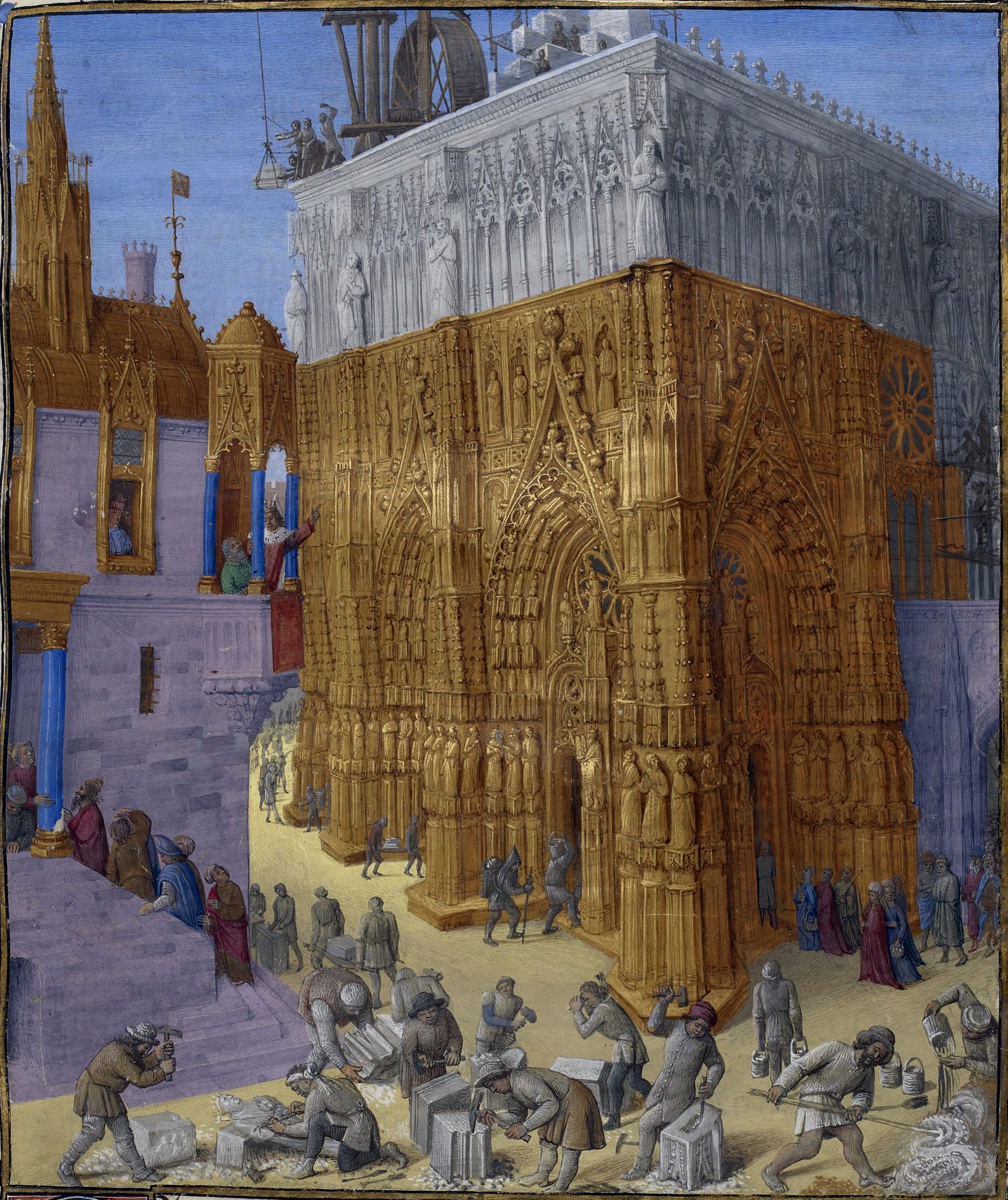
Solomon observes from a balcony while workers cut and carry stone beneath a Gothic building under construction, with a crane lifting masonry above.
Construction of the Temple of JerusalemJean Fouquet and workshop · c. 1470–75
Solomon’s Temple imagined as a medieval building site. Bibliothèque nationale de France, Français 247, fol. 163. Public-domain reproduction ↗

“Leaders cannot create the context in which they operate. Their distinctive contribution consists in operating at the limit of what the given situation permits. If they exceed these limits, they crash; if they fall short of what is necessary, their policies stagnate. If they build soundly, they may create a new set of relationships that sustains itself over a historical period because all parties consider it in their own interest.”

Henry KissingerOn China

Where to act

Find the source,
then choose the move

Suppose a team repeatedly misses a commitment. The result is visible below, but the explanation may sit anywhere in the Wang.

Above

Conflicting demands

Another appeal for effort leaves the conflict in place. Bring the tradeoff to whoever can authorize it, with a recommendation:

A conversation that could help

“To deliver this on time, I recommend pausing the other commitment. Here is what that would delay. Can we agree on that priority before I ask the team to proceed?”

In the middle

A decision left unmade

You need to take responsibility for the uncertainty you are creating:

A conversation that could help

“I’ve left you working around a decision I needed to make. Here is the priority now, what we’re stopping, and what would make me reconsider.”

Below

An obstacle in the work

Establish what is missing before choosing a response:

Support does not settle every problem. If someone understands the obligation, has the means, and will not carry it, that needs an honest conversation about commitment and responsibility.

A conversation that could help

“We agreed this would happen, and it hasn’t. Walk me through where it gets stuck. What do you need from me, and what can you commit to once we address that?”

The useful question is: what would change the situation? Check your reading with the people involved. What evidence points to this explanation? Agree on a change, what it should make possible, and when you will check. If priorities are settled but delivery is still blocked, there is more to understand.

When several things need attention

Deal with an immediate danger when you need to. Then address what keeps producing it.

Your attention is finite. If you spend every day repairing confidence above, you have less time to help the people doing the work. If you spend every day rescuing delivery, the conversations that protect your mandate can slip away. Both can leave you too depleted to judge well.

When problems reinforce one another, look for a change that would relieve pressure in more than one place. Settling an unresolved priority may prevent repeated disruption below. Giving someone real authority may end a pattern of rescue. Agreeing on useful reporting may reduce constant demands for reassurance.

What becomes possible

Keep the work and the relationships strong

Capable leaders learn who they can ask for what, when—and when an ask would be too much. They also know what they must provide for a commitment to be kept.

“If we have built sufficient trust based on mutual experience, I know what you are capable of, and I trust you to do it if you agree to it. You trust me not to order you to do something that you cannot do or that will endanger you for no important strategic reason.”

Chet RichardsCertain to Win

A sound arrangement delivers results while preserving the confidence, cooperation, and capacity that future work will need. Sometimes that means pursuing an opportunity. Sometimes it means changing an unrealistic deadline or setting aside work people cannot carry.

Reliable reporting can earn discretion. Fair standards can make cooperation easier. Advocacy can bring recognition and resources to people whose contribution has been overlooked. Developing someone’s judgment can let them carry a responsibility that previously depended on you. Staying in contact with the outside world can reveal possibilities your plans have missed.

The gain may be more reliable results, restored confidence, or time and energy to use where they matter most. Greater reach can follow when the relationships and capacity support it.

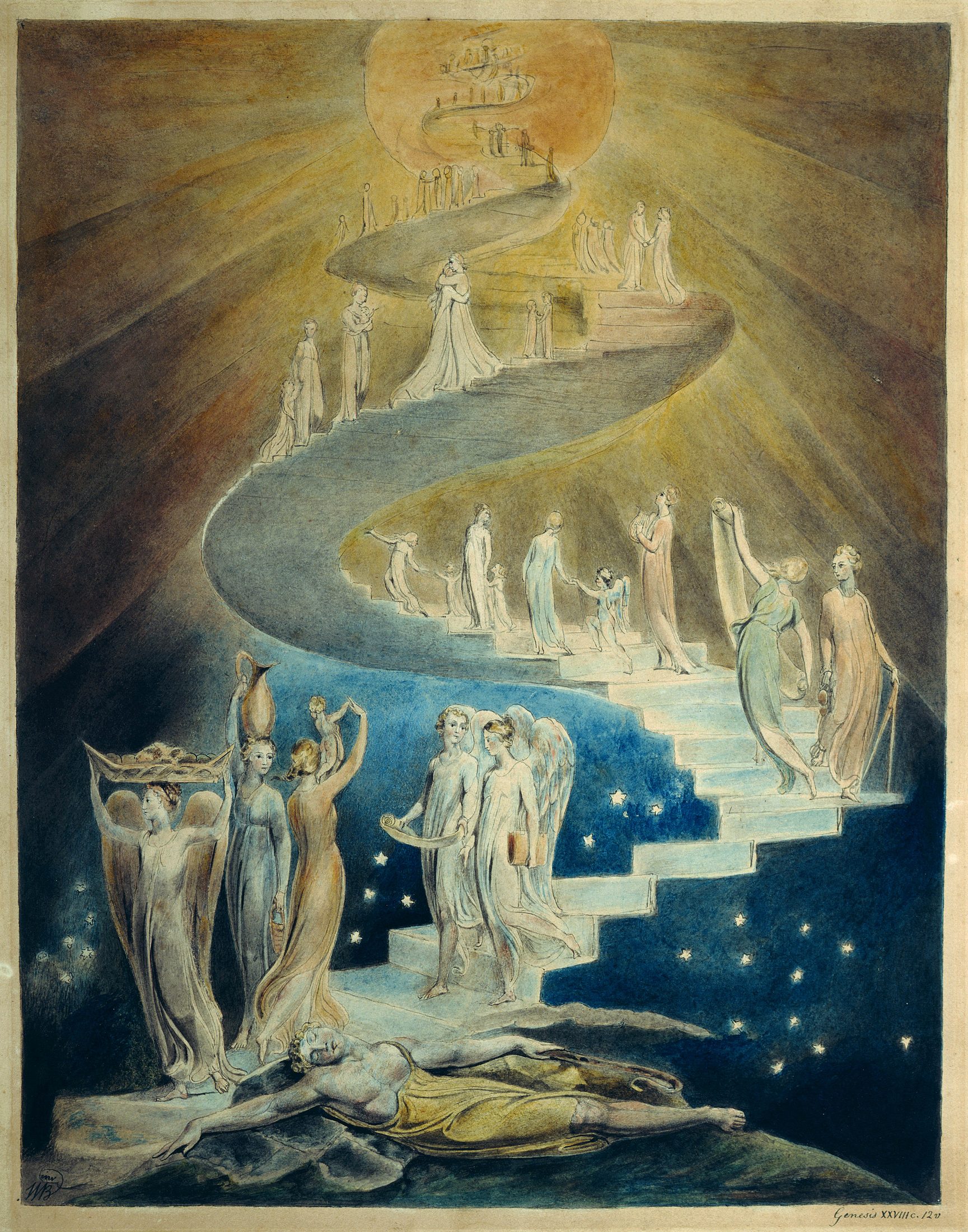
Jacob sleeps beneath a winding stair that rises through stars into golden light, with figures ascending and descending.
Jacob’s Ladder (Jacob’s Dream)William Blake · c. 1800
Blake’s vision of Jacob’s biblical dream: a passage between earth and heaven. British Museum. Public-domain reproduction ↗

Everyone is in the middle

An overlapping set of responsibilities The upper and lower bars of your Wang are the middle bars of neighboring Wangs. Each person has a mandate, their own judgment, and work they depend on others to carry. You

The person asking something of you is carrying something too. Your contribution may be part of how they fulfill a responsibility of their own. Understanding that can help you make a better recommendation, provide the information they need, or negotiate support.

A request you pass onward enters someone else’s circumstances. They may need to make decisions, secure cooperation, or settle competing obligations before they can fulfill it. Give them a mandate they can understand and enough authority and support to carry it.

Ask: what does this person need in order to take responsibility for what I am asking?

That question can make a difficult conversation more constructive. It also helps you see whether you have resolved a problem or simply passed its burden to someone else.

Return to the picture

Use Wang when something feels wrong, when a new opportunity appears, or as a monthly or quarterly check:

When all three are in good shape, you have grounds for confidence. When one is strained, work on what is driving the difficulty. Attend to what is weakening while you still have choices, and check that delivery today is leaving people able and willing to contribute tomorrow.

The framework does not remove uncertainty or guarantee the result. It helps you examine the conditions for leadership and choose where to act. Sometimes the responsible move is to negotiate a different mandate, refuse an impossible commitment, or leave an arrangement you cannot responsibly sustain.

“Leadership is getting results in a way that inspires trust.”

Stephen M. R. CoveyThe Speed of Trust

What needs attention so we can fulfill our commitments together and keep these relationships strong?